Buyer's guide
Galvanised vs painted trailers
We build painted trailers. Here is a straight comparison of both finishes, including where galvanising is the better choice.
The short answer
It depends where the trailer lives and where it goes
- Around Canberra, kept clean, chips touched up: painted does the job, costs less and comes in your colour.
- Into salt water every weekend: galvanised or aluminium. A painted steel trailer will rust faster.
- Parked outside near the coast: galvanised lasts longer with less upkeep, but even zinc wears out years sooner by the sea.
- Likely to be modified later: painted is easier to weld on, repair and repaint.
Resort Trailers builds painted trailers only, in Royal Blue, Silver, Dark Grey or Black, with a premium 2-pack option. For boats we also build alloy trailers.
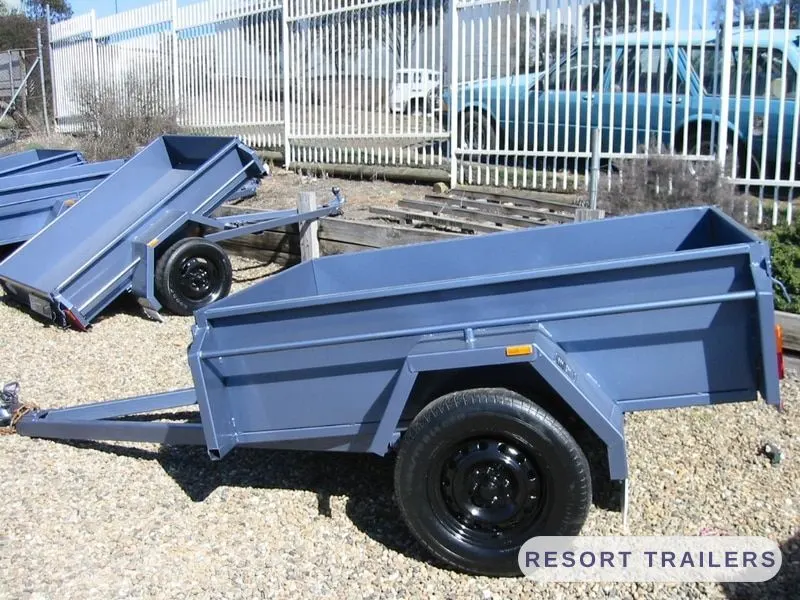
Side by side
How the two finishes compare
Galvanising
What galvanising does well
It looks after small chips by itself
Zinc corrodes in place of the steel, so a small scratch or chip does not start rusting the way it would on paint. The UK galvanizers association puts the protected width at up to about 5 mm.
It gets inside the tube
Hot-dip galvanising happens after the trailer is welded, so the zinc coats the inside of the chassis rails as well as the outside. That is where trailers often rust first, out of sight.
It lasts a long time inland
The Galvanizers Association of Australia rates Canberra as a low-corrosion (C2) area and estimates 78 to over 100 years before first maintenance for a typical 55 micron coating there.
It is the better finish for salt water
Painted steel is a poor match for a trailer that goes into salt water every weekend. Galvanised steel or aluminium is the usual choice for that job.
Where galvanising falls short
It does not stop all rust
A deep gouge wider than a few millimetres, or a big area of damage, still needs repairing with zinc-rich paint, and that paint is not as tough as the original coating.
The coast wears it out faster
The same coating the GAA rates at 78 to 100+ years in Canberra is rated 13 to 26 years on a calm sea shore and 6 to 13 years within 200 m of surf beaches.
Colour is extra work
It comes out dull grey and can look uneven. To get a colour, the zinc has to be prepared and painted over, which adds cost.
Thin steel can warp in the bath
The zinc bath runs at about 450°C. The American Galvanizers Association says thin sheet is the steel most likely to distort, which matters on trailer sides and floors.
Later changes are harder
Welding galvanised steel burns off the zinc and gives off zinc oxide fumes, which can cause metal fume fever. Adding a toolbox or a cage later is more work.
"Gal" is not always hot-dip
Some trailers are made from pre-galvanised tube, which is coated before it is cut and welded. That coating is usually around 20 to 30 microns, thinner than hot-dip, and the welds and cut ends are bare. Ask which one you are buying.
It costs more up front
Galvanising is an extra step after the trailer is welded, so a galvanised trailer usually costs more than the same trailer painted.
It can grow white rust
Galvanising stored wet or stacked without airflow can get a white powdery bloom. It is usually only on the surface, but it looks bad on a new trailer.
Paint
What paint does well
Your colour, your look
Paint gives you a clean, even finish in the colour you want, which matters for a business trailer that matches a fleet or carries a logo.
Easy to fix and change
Scratches can be touched up and panels repainted to match. Welding on a toolbox, cage or rack later is straightforward.
Usually cheaper up front
There is no galvanising step, so a painted trailer usually costs less to build.
Plenty for Canberra use
For a trailer used around Canberra and kept tidy, a good paint system does the job. Canberra air is gentle on steel compared with the coast.
Where paint falls short
A chip is an open door
Once the paint is broken, water reaches bare steel. Rust starts at the chip and can spread underneath the paint around it, lifting it.
It needs looking after
Chips need touching up early, before rust gets a start. Leave them and the repair grows.
Hidden spots rely on the paint reaching them
Inside closed sections and tight seams, protection is only as good as the coverage.
Not for regular salt water
A painted trailer that goes into salt water every weekend will rust faster. You can rinse it, but salt hides in seams and crossmembers.
Looking after a painted trailer
Four habits that stop rust before it starts
- Touch up stone chips and scratches as soon as you see them.
- Rinse the trailer with fresh water after the beach, a boat ramp or a salted road, including underneath.
- Park it where water drains away, under cover if you can.
- Check the underside once a year, or have it checked at a service.
Found rust or a damaged chassis? We do trailer repairs and servicing at 36 Stephens Road, Queanbeyan.
Common questions
Do you build galvanised trailers?
No. We build painted trailers only. If you need a trailer that goes into salt water every week, we can build an alloy boat trailer, or you may be better served by a builder who galvanises.
If galvanising gets chipped, does it rust?
Not at a small chip. Zinc corrodes in place of the steel, so the steel around a small scratch stays protected. A wide gouge or a large damaged area is different: it can rust and should be repaired with zinc-rich paint. Paint is the finish where a small chip lets rust start.
How long does galvanising last in Canberra?
The Galvanizers Association of Australia rates Canberra as a C2 (low) corrosion area and estimates 78 to over 100 years to first maintenance for a 55 micron hot-dip coating. Near the coast that drops sharply, to 13 to 26 years on a calm sea shore and 6 to 13 years near surf beaches.
Is a painted trailer fine for Canberra?
For most uses, yes. Canberra is one of the gentler places in Australia for steel. A painted trailer that is kept clean, has its chips touched up and does not sit in water will last well.
What is the difference between hot-dip galvanised and gal tube?
Hot-dip galvanising coats the whole trailer after it is welded, inside and out. Pre-galvanised (gal) tube is coated before it is cut and welded, with a thinner coat of around 20 to 30 microns, and the welds and cut ends need extra protection.
Can you paint over galvanising?
Yes, with the right preparation. Paint over galvanising, called a duplex system, lasts longer than either coating on its own. It costs more than either finish alone.
Sources
Where these facts come from
Life figures are estimates from the Galvanizers Association of Australia, based on AS/NZS 2312.2. Real life varies with the site, the steel and how the trailer is looked after.
- Galvanizers Association of Australia: performance in various environments (corrosion categories, Canberra C2, life to first maintenance)
- Galvanizers Association (UK): barrier and sacrificial protection (scratches up to about 5 mm)
- American Galvanizers Association: damaged galvanized steel and repair
- American Galvanizers Association: warpage and distortion
- American Galvanizers Association: duplex systems (paint over galvanizing)
- Australian Steel Institute: white rust prevention and treatment
- WorkSafe WA: welding hazards, including metal fume fever from galvanised metal
- Edcon Steel: pre-gal vs hot-dip galvanised steel
- AMPP: rust creepage (undercutting) from damage in a coating
- Boating: choosing the right boat trailer (painted steel in salt water)
Talk to us about your trailer
Tell us where it will live and what it will carry, and we will tell you honestly what suits.